
Table of Contents
Air cargo services in Dubai are provided by licensed logistics and freight forwarding companies that specialize in transporting time-sensitive, high-value, or regulated goods by air. These services typically include cargo booking with airlines, export documentation, customs coordination, and delivery planning at the destination airport. Dubai’s air cargo ecosystem supports commercial shipments, personal consignments, and international trade movements across Asia, Europe, Africa, and North America. In Dubai, logistics providers such as Nautical Gulf coordinate air cargo shipments by aligning airline schedules, customs compliance, and documentation accuracy rather than relying on speed claims alone. Businesses and individuals choose air cargo when reliability, regulatory handling, and transit predictability are critical.

Air cargo services are structured around compliance, coordination, and cargo safety. While service scope varies by provider, most air freight operations in Dubai include the following components.
Logistics providers book cargo space with international airlines operating from Dubai. This includes selecting appropriate aircraft capacity based on cargo size, weight, and handling requirements.
Air cargo shipments require accurate paperwork such as air waybills (AWB), packing lists, commercial invoices, and export declarations. Providers prepare and verify these documents before cargo acceptance.
Air cargo services usually include coordination with UAE customs authorities to ensure goods are cleared for export in accordance with regulations.
While logistics companies may not package goods directly, they guide shippers on airline-approved packaging, labeling, and safety standards.
Many providers work with international agents to support cargo handling and clearance at the destination airport.

Dubai’s position in global air logistics is the result of infrastructure investment and international connectivity.
Dubai lies within an eight-hour flight radius of major global markets, enabling efficient cargo movement between continents.
Dubai’s airports are designed to handle large cargo volumes, including temperature-sensitive, hazardous, and oversized shipments.
Multiple international cargo and passenger airlines operate from Dubai, providing frequent connections to global destinations.
Dubai integrates air cargo operations with free zones, ports, and logistics corridors, supporting multimodal freight movement.
Air cargo is typically chosen for specific categories of goods where transit time, value, or compliance is critical.
Electronics, machinery components, spare parts, and manufactured goods are commonly shipped by air to meet supply chain timelines.
Luxury goods, medical equipment, and specialized instruments often move via air cargo due to handling control and reduced transit exposure.
Urgent consignments, replacement parts, and project-critical cargo are frequently routed through air freight services.
Individuals relocating internationally may ship essential personal items or documents using air cargo options.
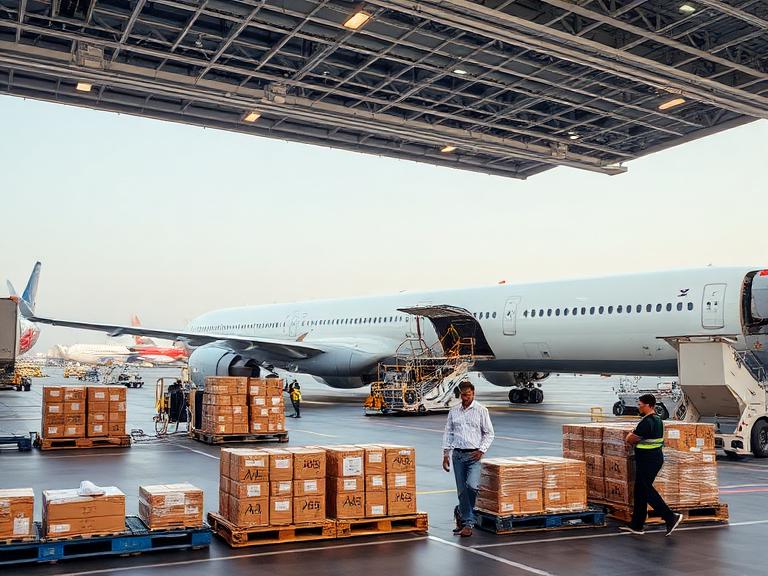
Choosing air cargo over sea freight depends on shipment priorities rather than general assumptions.
Air cargo generally involves shorter transit cycles compared to sea freight, making it suitable for urgent shipments.
Air freight is typically used for lighter, compact cargo, while bulk shipments are more cost-efficient by sea.
Certain goods require controlled handling or faster clearance, which air cargo infrastructure can support.
Companies often use air cargo to avoid production delays or stock shortages.
Documentation accuracy is one of the most critical elements of air cargo shipping.
The AWB serves as the primary transport document, detailing shipper, consignee, and cargo information.
These documents describe the cargo, value, and packaging details required for customs assessment.
UAE export regulations require proper declarations aligned with cargo classification and destination rules.
Certain items require additional approvals or certifications before air shipment.
Selecting an air cargo provider in Dubai involves evaluating operational capability rather than marketing claims.
Providers should be licensed and familiar with UAE aviation and customs regulations.
Established providers work with multiple airlines to support diverse routing options.
Consistent documentation handling reduces the risk of cargo holds or penalties.
Clear updates and defined responsibilities indicate professional cargo management.
Providers should explain cargo insurance options and liability clearly.
Nautical Gulf approaches air cargo services through structured coordination rather than speed-driven positioning. Its operations focus on aligning cargo classification, documentation, airline booking, and customs procedures into a single workflow.
By operating from Dubai, the company works within established air cargo frameworks and collaborates with carriers and international agents to manage shipment movement. The emphasis remains on regulatory compliance, documentation accuracy, and coordination across departure and arrival points, reflecting standard practices expected from experienced logistics providers in the UAE.
Air cargo services in Dubai support a wide range of users across commercial and personal needs.
Businesses shipping goods to international markets rely on air cargo for time-sensitive trade flows.
Companies managing supply chains use air freight to avoid production or distribution disruptions.
Engineering, energy, and technology sectors often move critical components by air.
Personal consignments that require faster movement may be shipped via air cargo.
Avoiding common issues helps ensure smoother air freight operations.
Errors in paperwork are a leading cause of air cargo delays.
Incorrect cargo descriptions can result in compliance issues or rejection by airlines.
Non-compliant packaging may prevent cargo acceptance.
Air freight still involves handling, clearance, and coordination at both ends.
Air cargo services in Dubai involve transporting goods by air with support for documentation, customs, and airline coordination.
Air cargo from Dubai is generally reliable due to strong airport infrastructure and international airline connectivity.
Air freight shipping involves cargo booking, documentation preparation, customs clearance, and transport via international airlines.
Commercial goods, high-value items, sensitive cargo, and urgent shipments are commonly shipped by air.
Most professional air cargo providers coordinate customs clearance as part of the process.
Timelines depend on destination, airline schedules, and clearance procedures rather than fixed durations.
Yes, individuals can use air cargo services for personal or relocation-related shipments.
Common documents include an air waybill, commercial invoice, packing list, and export declaration.
Air freight generally involves higher operational costs, but suitability depends on urgency and cargo type.
Yes, Dubai is widely used for international air cargo shipments by businesses.
Certain goods require special approvals or are restricted based on aviation and customs regulations.
Look for licensing, experience, documentation accuracy, and communication standards.
